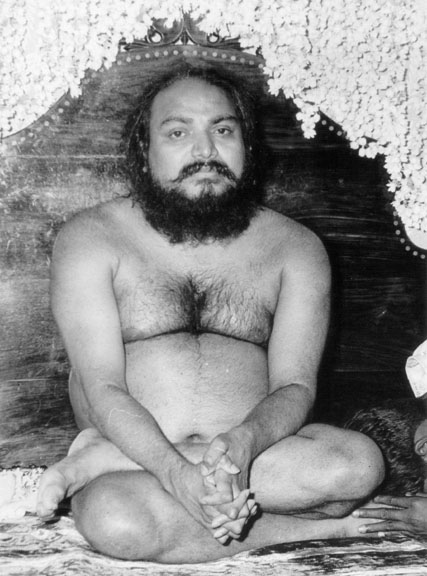
“Through meditation you get peace of mind. Whatever you do in life gets done better.” — Shri Shivabalayogi Maharaj
A gift, not a transaction
Meditation given as a gift
Shri Shivabalayogi Maharaj described himself as a practical yogi — one who gives experiences rather than theories. What he gave was dhyana: meditation on the space between the eyebrows. He asked no fee, no change of religion, and no belief in advance. He preferred not even to call it initiation, using instead a Telugu expression meaning the gift of meditation.
FocusThe space between the eyebrows — the bhrikuti, or third eye
CostNothing. “God did not charge him any money for meditation.”
ReligionKeep your own faith — the practice is not connected with any religion
InitiationGiven once in a lifetime; the connection then guides the practice
Shivabalayogi approached spiritual life as a practical matter. He offered direct experience rather than doctrine, and he measured meditation by its effects in ordinary life — a steadier mind, clearer thinking, better work and study, better health.
To take up meditation only for enlightenment, he said, is like training only for the Olympics: a goal for the very few that discourages everyone else. The truer reason to meditate is that the practice itself brings peace and clarity, the way physical exercise brings health — benefits available to anyone who sits regularly, whatever their aim.
“If you do meditation for one hour a day, it will give you peace of mind. It will solve all your problems and give you good health.”Shri Shivabalayogi Maharaj
Because the results are meant to be felt rather than believed, he encouraged people simply to test the practice for themselves.
Meditation & Business
Shivabalayogi never charged for meditation, for initiation, or for his blessing, and he was direct about why. Spiritual transmission, in his teaching, is not something that can be bought or sold.
“God did not charge him any money for meditation, so why should Shivabalayogi?”Shri Shivabalayogi Maharaj
Asked about teachers who take payment, he answered plainly: “That is business. It is not yoga. The people who do business cannot reach God.” The guru, he said, can be fed anyway; there is no need to charge. Programs given in his tradition remain free, and those who attend are given prashad — blessed food — without cost.
Meditation Without the Religion
Shivabalayogi taught that this meditation belongs to no religion and asks no one to leave their own. It is offered as a support to whatever path a person already follows, not as a replacement for it.
“A person of any faith, if he comes to me, need not leave his faith. He can still do the meditation. He can be a devotee of mine in spite of being in his own faith.”Shri Shivabalayogi Maharaj
“Meditation is not connected with any religion,” he said. “You can continue whatever you have been doing until now.” A promise or vow already made to another tradition, he added, is no obstacle. He often told people that practising this meditation would let them “develop your own religions very much.”
KeepYour faith
Christian, Hindu, Muslim, Buddhist, or none — the practice sits alongside it.
AddThe sitting
“Whenever you find a convenient time, you also do this meditation.”
NotA conversion
No creed to accept, no membership, no vow required.
The Practice of Concentration
In Shivabalayogi’s teaching, concentrating the mind does two things at once. It loosens the hold of worldly tension, and it deepens awareness.
He described the everyday fruit of practice in concrete terms: “Meditation is to control one’s mind. Through meditation one can get peace of mind. One’s blood pressure comes down so your health improves. Whatever one does in life is done better. One comes to know one’s own mind.” With continued practice, he said, meditation “helps you achieve Self realization” — but that outcome, in his teaching, is not the product of effort alone.
“Meditation reduces the tension in you. With progress it helps you achieve Self realization.”Shri Shivabalayogi Maharaj
Whether a practitioner reaches the deepest states, he taught, finally depends on grace — “it all depends upon God, the Inner Guru, or the Self.” He also distinguished the momentary awakening he called enlightenment from the settled state of a realised yogi: “Enlightenment happens in a moment and it happens only once. Tapas is performed gradually… Enlightenment is not everything.”
The Technique
The technique Shivabalayogi gave is the one his own Guru gave him. It uses a single point of focus and nothing else — no sound, no image, no object.
The focusBetween the eyebrows
Rest the attention on the bhrikuti, the space between the eyebrows — the third eye.
The eyesStill
“Don’t move your eyeballs and eyelids. If you can control your eyeballs and eyelids, then your mind will also get controlled.”
No mantraNo sacred sound
He gave no mantra. The Dhyana manual states that a mantra is not needed for this technique.
No imageNo visualisation
No form, picture or object is held in the mind — only the steady point at the brow.
PostureAs you are comfortable
“Shri Swamiji does not prescribe any particular posture… You may adopt whatever posture you find comfortable.” Keep the spine erect and the body still.
TimeAt least one hour
The mind stays busy for about the first twenty minutes; “after forty minutes you will get real meditation.”
Why the brow, and not the heart? “If you concentrate on the heart then the mind can go anywhere. It can keep wandering around. But if you concentrate at the point between the eyebrows your mind will come under control. That is the difference.” He pointed to the moment in the Bhagavad Gita when Krishna touched Arjuna at this point and showed him the formless.
What makes an otherwise advanced practice workable for a beginner, in his teaching, is the empowerment given at initiation. “All the student needs to do is meditate for one hour a day. The rest is in Swamiji’s hands.”
The Teacher Within
After initiation, Shivabalayogi taught, no ongoing physical contact with the guru is needed. There are no classes to attend. The connection formed at initiation is what continues to guide the practice.
“If you practice the meditation daily, then Swamiji’s astral body will be with you and help you wherever you are.”Shri Shivabalayogi Maharaj
The practitioner’s part is simply the daily sitting; “your duty is to perform meditation for one hour a day. He will take care of the rest.” The speed of progress, he said, depends on the sincerity and intensity of one’s practice together with the blessings of the guru.
The Gift of Meditation
Shivabalayogi deliberately avoided the word initiation, with its sense of obligation. He spoke instead of the gift of meditation — something given freely, carrying no commitment and no requirement to join anything.
At a sitting, he would bless vibhuti — sacred ash — on the dais. Assistants applied it at the brow of each person and quietly gave the instruction, and the group then meditated for about forty-five minutes to an hour in his presence. Afterwards, recorded instructions were played and each person was given blessed ash, a printed instruction sheet, and a little vibhuti to take home.
“Once in your lifetime Swamiji initiates you.”Shri Shivabalayogi Maharaj
He described initiation as compatible with any prior vow or religion: “Even if you have promised or signed a promise or anything like that, or if you are in a particular religion, none of that is going to make it difficult for you to meditate.” What is asked in return is only that the person practise. Although he emphasised the soul connection between a guru and a devotee, he held that the physical contact still mattered — when someone asked why an astral initiation would not do, he answered, “Why were you born through your mother’s womb?”
As the crowds grew, from 1961 onward he blessed trusted assistants — chosen for their devotion rather than for any spiritual standing — to apply the vibhuti and give the instruction in his place. Very large numbers of people received initiation in this way.
Vibhuti
Vibhuti is sacred ash blessed by the guru. In Shivabalayogi’s teaching it is applied as a mark at the space between the eyebrows before sitting for meditation, and it is treated as sacred.
“It contains the power to transmit power to meditate.”Shri Shivabalayogi Maharaj, on the vibhuti given at initiation
Shivabalayogi said the vibhuti is given “to help you with all of these distractions” that arise in the early part of a sitting. The Dhyana manual asks that the blessed ash be kept with care — guarded from being spilled or defiled — and worshipped briefly before each session, then applied as a tikka at the brow. During illness, the same manual suggests taking a little vibhuti with water.
The detailed manual The Practice of Dhyana Meditation — chapter nine of Life & Spiritual Ministration — sets out the stages a practitioner may pass through. It is careful to say that these are not a guaranteed sequence, and that how far anyone travels depends finally on grace.
PreparationA quiet place, a comfortable erect posture, a light stomach, a fixed daily hour.
InitiationThe touch at the brow and the transmitted power that assists concentration.
Steadying sight and mindHolding the gaze at the brow without strain until it is still; bringing the mind to one-pointedness (ekagratha).
StillnessThoughts thinning until only pure awareness (chit) remains — first as darkness, then as light.
ExperiencesCurrents, visions, the rise of kundalini — described in the manual as sign-posts, not goals, to be observed and not pursued.
SamadhiAbsorption in the Self: savikalpa, then nirvikalpa, then the natural state of sahaja nirvikalpa.
Self-Realisation (Sakshatkara)To remain always as the pure Atman — said to come by the grace of God in the form of the Guru.
Every answer below is drawn from Shivabalayogi’s own recorded words or from the Dhyana manual.
Shivabalayogi defined it simply: “Meditation is to control one’s mind. Through meditation one can get peace of mind.” When the mind is brought to stillness, he taught, peace, health and clarity follow of themselves.
On the space between the eyebrows — the point called the bhrikuti or third eye. No other object, sound or image is used.
“If you concentrate on the heart then the mind can go anywhere… But if you concentrate at the point between the eyebrows your mind will come under control.” He pointed to Krishna touching Arjuna at this point in the Bhagavad Gita to show him the formless.
No. He gave no mantra. According to the Dhyana manual a mantra is unnecessary for this technique, and where a practitioner’s nature calls for one it is said to arise of itself during regular practice.
No. No image, form, deity-picture or prayer is held in the mind — only steady attention at the brow.
No. “Meditation is not connected with any religion. You can continue whatever you have been doing until now.” “A person of any faith… need not leave his faith.”
No. “Shri Swamiji does not prescribe any particular posture for meditation. You may adopt whatever posture you find comfortable.” The manual advises keeping the spine erect, the body relaxed and the face level or slightly raised, and allows changing posture if needed without breaking the focus at the brow.
“There are no restrictions concerning diet, cleanliness or the like.” “The meditation itself will let them know what kind of food is good for them.” He asked only that a person begin, “as you are,” for at least one hour a day.
At least one hour a day. He said the mind stays busy for about the first twenty minutes, and that “after forty minutes you will get real meditation.” Serious practitioners, the manual says, lengthen their sittings only gradually and naturally.
“When you meditate, you should be careful that you don’t move your eyeballs and eyelids. If you can control your eyeballs and eyelids, then your mind will also get controlled.” The manual adds that this steadiness should come without any strain.
Vibhuti is applied at the brow, the instruction is given quietly, and you sit for about an hour of meditation in the teacher’s presence. Through this, according to the teaching, the power to meditate is transmitted. It is given once in a lifetime.
It is sacred ash blessed by the guru, applied at the brow before meditation. In the teaching it is said to “contain the power to transmit power to meditate” and to help with the distractions of the early part of a sitting. The manual asks that it be kept and treated as sacred.
The Dhyana manual treats this as the universal first experience. Its remedies are dispassion (vairagya) and steady, repeated practice (abhyas); for acute agitation it suggests a little pranayama, or pausing to read scripture or to sing bhajans. The vibhuti, Shivabalayogi said, is “to help you with all of these distractions.”
The manual describes drowsiness as natural when the mind’s tendencies are being stilled. It advises resting until the need for sleep is satisfied, keeping the face level or slightly raised rather than drooping, and not mistaking a drifting, half-asleep state for meditation — which it says should be alert and vigilant.
Many report colour, light or a vision of their chosen deity, especially at initiation. The manual says these are encouraging in the early stages but are neither necessary nor the goal; one should observe them without following them and keep the attention steady at the brow.
“From the age of five until the age of ninety years, anyone can do meditation… There is no relation between age and meditation.” Children may begin at about five for five to ten minutes. “Do not worry about your age. It is the body which becomes old.”
The manual values regularity above all: it says a single missed day can take seven to ten days to recover, and encourages fixing a set time each day so that the urge to meditate arises naturally, “similar to experiencing hunger at regular mealtimes.”
In the manual, manolaya is the temporary subsiding of the mind — peaceful, but only an intermediate state. Manonasha, the destruction of the mind so that it does not rise again, is the true aim. The bliss of manolaya, it warns, can be mistaken for the goal.
Shivabalayogi on Meditation
In this 1989 interview for the New Age Forum, Shivabalayogi speaks about what meditation is, and about samadhi and Self-realisation.
1989 · New Age Forum interview
Part One — On Meditation
About twelve minutes. Part of the full film archive.